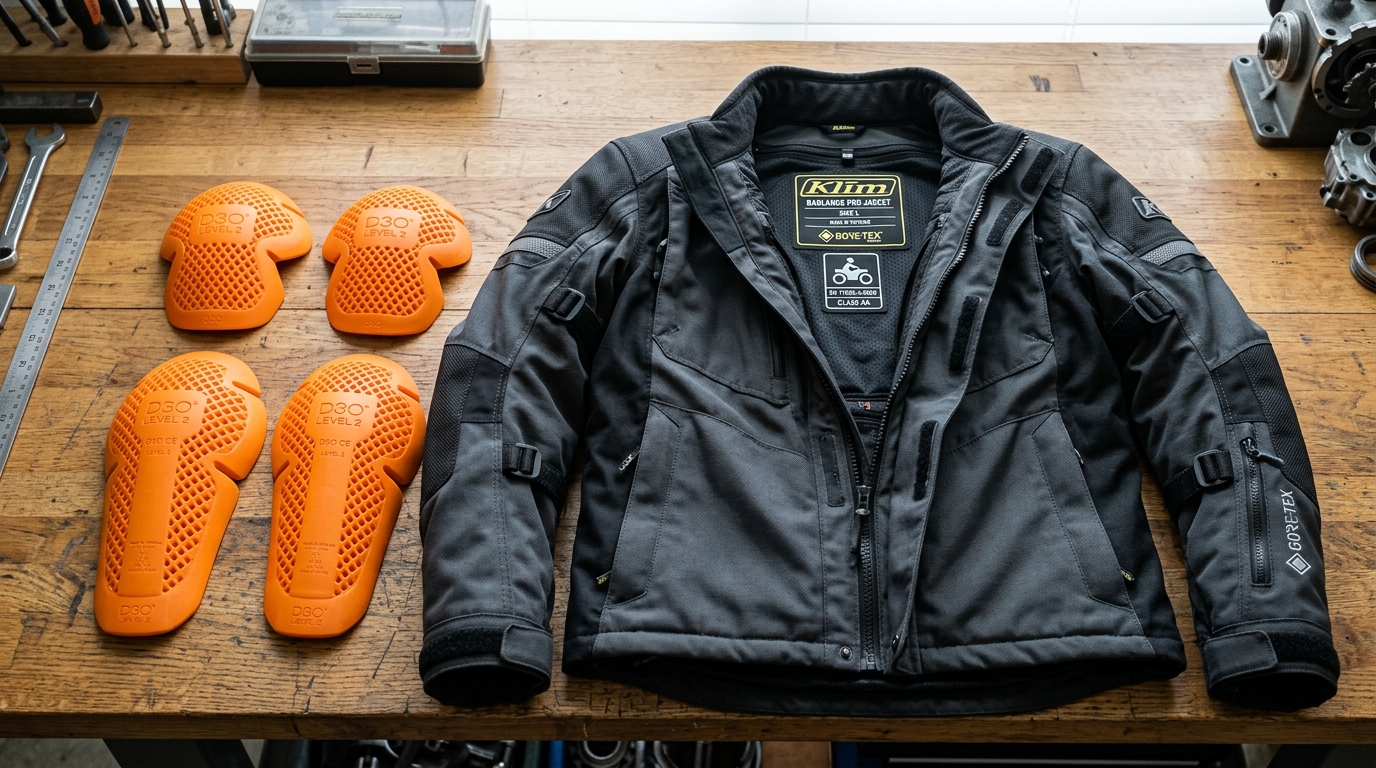
Ask for the actual standard and class.
A general “CE” claim is not a complete description of a motorcycle garment. Look for the manufacturer’s declaration of conformity and the standard on the label. EN 17092 distinguishes garment classes including AAA, AA and A, with differing test requirements. B and C serve different protective functions; they should not be treated as equivalent complete riding outfits.
Garment and armour ratings are separate.
Impact protectors have their own standards and performance levels. Check which protectors are included, where they sit when you are on the motorcycle, whether they stay in position and whether back or chest protection is supplied or optional. A garment class is not the same thing as an armour level.
Match the kit to the ride.
Try clothing in a riding position and check sleeve, waist and trouser coverage. For UK commuting, assess waterproof construction, ventilation, glove overlap, pockets and how the layers work together. Record these as separate criteria instead of turning a certification badge into an unsupported overall safety score.
Sources & further reading
Specifications, prices and rules can change. Check the linked primary source before making a purchase or riding decision. Our editorial standards.