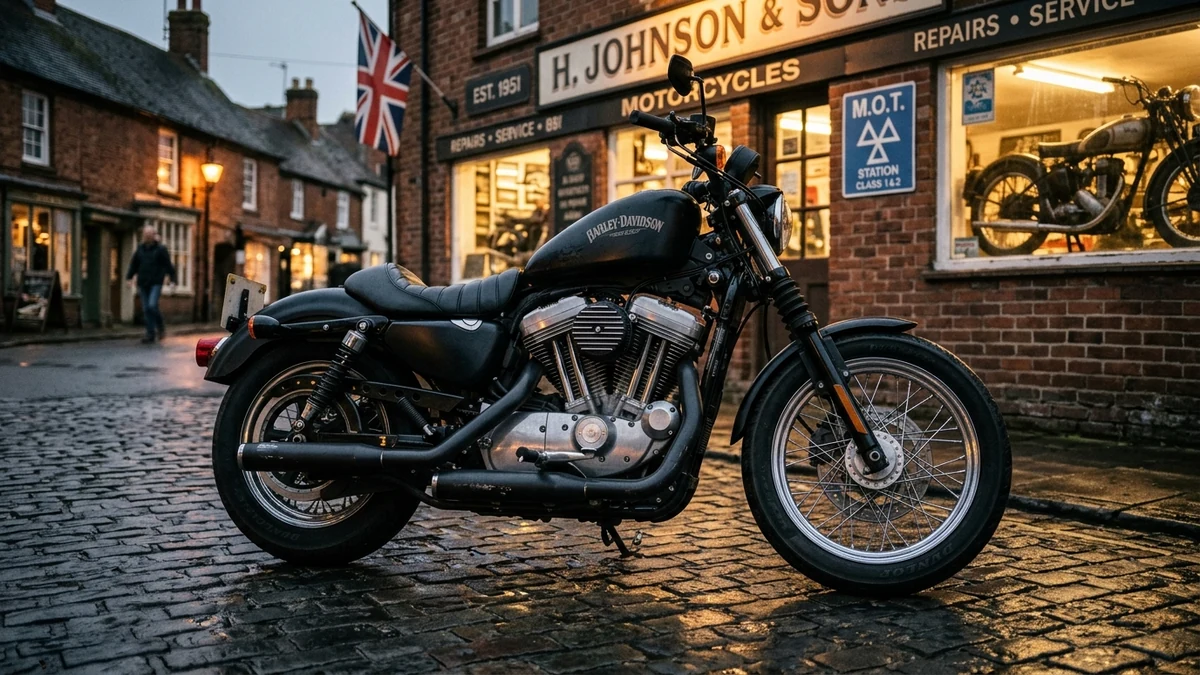
Identify the model
“Sportster 883” is a starting point for a search, not a complete specification. Ask for the model designation, model year, registration, VIN and details of any engine conversion before travelling. An Iron 883, Custom or another 883 variant should not inherit its measurements or equipment from a different listing.
Registration year and model year can differ. Imports and modified motorcycles need particular care: ask which market the bike was supplied for, what changed, and which documents support the description. Use the Harley-Davidson Service Information Portal to locate the appropriate manual, or ask a dealer to identify the bike from its VIN.
This guide concerns the older XL/Evolution 883 buying decision. The manufacturer’s history identifies the Sportster S introduced in 2021 as a departure using the Revolution Max engine. A modern Sportster S review is not a specification sheet for an 883. If you are still choosing a model family, begin with our broader Harley-Davidson buying guide.
Compare model years
Use these changes to organise viewings, not to rank every year from best to worst. The sources establish engineering milestones, not comparative reliability.
- Before 2004: compare these earlier bikes separately from the rubber-mounted generation. Pay attention to how the actual motorcycle feels and to the condition of age-sensitive parts; an attractive odometer reading does not describe its storage history.
- 2004–2006: Harley-Davidson’s history records the introduction of rubber engine isolation mounts across the 2004 Sportster range. These years sit before the manufacturer’s 2007 standard-EFI milestone. Verify the fitted fuel system and any alterations.
- 2007 onward, within the XL 883 range: Harley-Davidson says electronic fuel injection became standard across its models in 2007. This is a useful shortlist boundary if you want a factory fuel-injected bike, but it is not proof of good maintenance.
Sources: Harley-Davidson Sportster history and Harley-Davidson’s carburettor and fuel-injection guide. These US manufacturer histories do not confirm the brakes, suspension, seat, security equipment or emissions status of an individual UK bike. Check those separately.
There is no evidence here for a universal “years to avoid” list. A documented, carefully inspected older example may be a better purchase than a later one with unexplained changes. Make the decision on the bike in front of you.
883 versus 1200
If your search includes a Sportster 1200, compare exact variants and years. Do not assume that the smaller engine means a lighter motorcycle, a lower seat or a lower insurance quote. Request the correct specifications, sit on both bikes and obtain quotes using their actual registrations and declared modifications.
An advert describing an “883 converted to 1200” needs more investigation than a badge check. Ask who did the work, which parts were used, what supporting tuning or other changes were made, and whether invoices identify the motorcycle. Have a specialist assess the work and confirm the insurer will cover the bike as described. Do not value a conversion as a factory 1200 simply because the seller does.
Keep the purchase goal clear. If you want a mostly standard motorcycle with a straightforward service history, an undocumented custom build creates additional questions even when it looks appealing. If customisation is the attraction, include the cost of checking the work in your budget.
Paperwork and recalls
Follow the GOV.UK used-vehicle checks: compare the seller’s details with official records, inspect the V5C and check the vehicle and engine identifiers against the paperwork. Pause the purchase if the identity does not add up.
Read the MOT history as a sequence. Look for mileage discrepancies and recurring advisories, then ask for evidence of repairs. A pass does not replace a mechanical inspection. Consider a reputable history check for finance, theft and write-off information; MOT history alone does not answer those questions.
For recalls, use the motorcycle route on GOV.UK’s recall page, which searches by manufacturer, model and year. Ask a Harley-Davidson dealer to check the VIN and document any outstanding action or completed repair. A model-level result does not establish whether this particular bike has received the remedy.
Ask for both keys or supplied security fobs, where applicable, and any documents needed to operate the fitted security system. Agree how missing items will be resolved before money changes hands.
At the viewing
Arrange to see a cold start and allow time for an independent inspection. Ask the seller to demonstrate starting and controls in a suitable ventilated location. A warm engine on arrival is a reason to ask questions, not proof of a hidden fault.
- Leaks and corrosion: note staining, fresh fluid, damaged finishes and corrosion around fixings and exposed components. Have the source and repair cost of a leak identified rather than accepting a blanket “they all do that”.
- Drive and service items: ask the inspecting mechanic to assess belt and sprocket condition, clutch operation and maintenance needs using the correct manual. A belt drive does not remove the need for inspection.
- Tyres, brakes and suspension: record tyre condition and age markings, visible damage, fork leaks and anything requiring specialist assessment. Do not treat remaining tread as a full tyre-condition assessment.
- Electrical changes: inspect the quality of accessory wiring and ask for fitting records. Check lights, switches and the instrument warning sequence against the manual; unexplained warnings need diagnosis.
- Exhaust, intake and controls: list non-standard parts and ask whether the original items are included. Changed bars, foot controls or suspension can materially alter how the bike fits you.
Ask a mechanic familiar with the model to distinguish wear, overdue maintenance and faults. Only arrange a road test with the seller’s permission, appropriate licence entitlement and confirmed insurance cover.
Sportster-specific checks
These are useful checks on an XL 883, with the relevant model and modification limits below. The sources describe components and potential problems; they do not establish how often an unmodified UK 883 fails.
1. Has the clutch’s riveted spring plate been replaced?
Ask whether the original spring plate remains in the clutch pack and request invoices for any replacement. Barnett’s 1991–2022 Sportster listings distinguish standard replacement packs that retain the riveted plate from extra-plate kits that remove it. “New clutch” therefore does not tell you which arrangement is fitted.
Energy One explicitly warns that the double-riveted plate can come apart in its 1984–1990 application. That is evidence of a failure mode, not a failure rate or proof that the same year range applies to every later bike. On any example with clutch drag, difficult engagement or unexplained clutch work, get a specialist diagnosis. An external viewing cannot establish the condition of hidden rivets, and those symptoms alone do not identify the failed part.
2. Is there oil around the rocker-box joints?
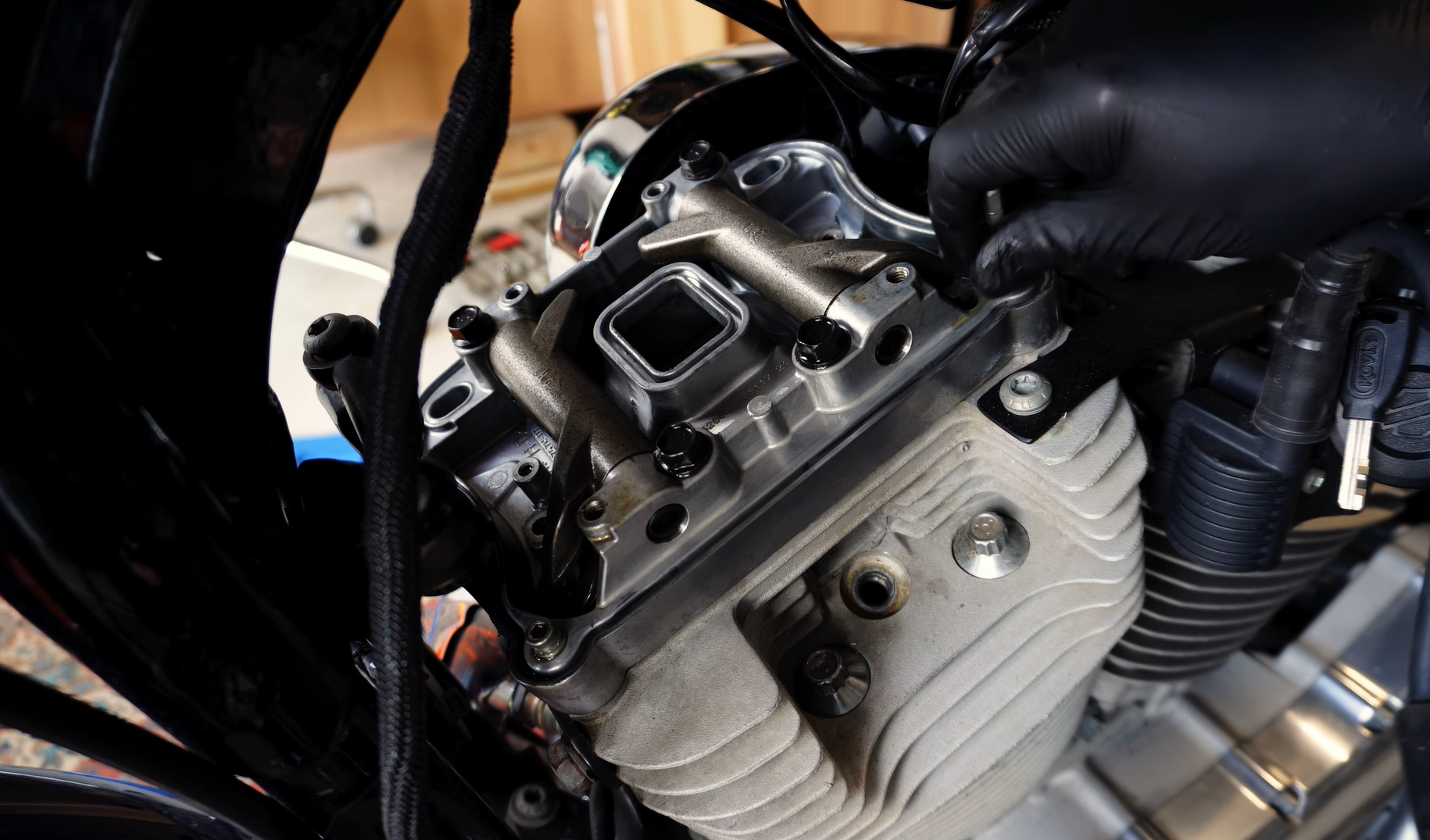
Look at the cover joints at the top of both cylinders for fresh oil and ask about gasket repairs. Have a mechanic trace the source; oil at a joint is not enough to diagnose which seal or component needs work. Do not accept “just a gasket” as a repair quote.
For a bike with performance cams or engine work, ask who checked rocker-box clearances. Hammer Performance’s XL cam-installation guidance documents rocker-arm contact with the cover as a potential source of noise and leaks, particularly on modified 2003-and-earlier XLs. That modification-related mechanism should not be presented as a universal stock-883 defect. The specialist page includes photographs for discussing the issue with your mechanic.
3. Have the rubber mounts and stabiliser links been checked?
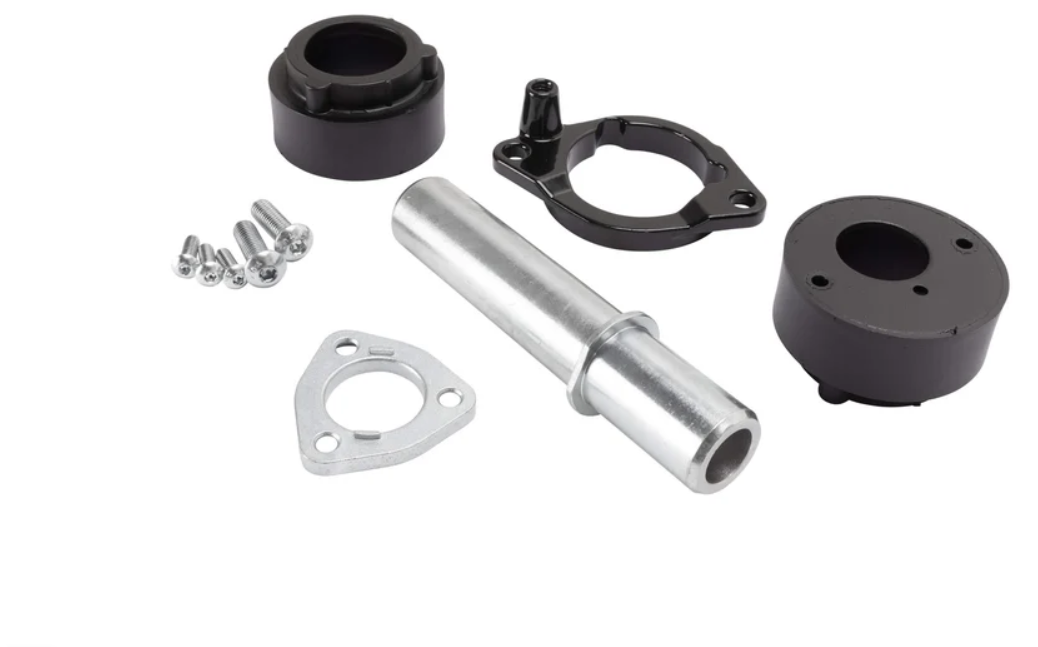
On the rubber-mounted generation introduced for 2004, ask about mount condition and any unexplained change in vibration. Harley-Davidson’s 2007 maintenance table includes engine-mount and stabiliser-link inspections. Ask a specialist to distinguish normal engine movement from deterioration or loose components; “it is a Harley” is not a diagnosis. Use the schedule for the actual model year.
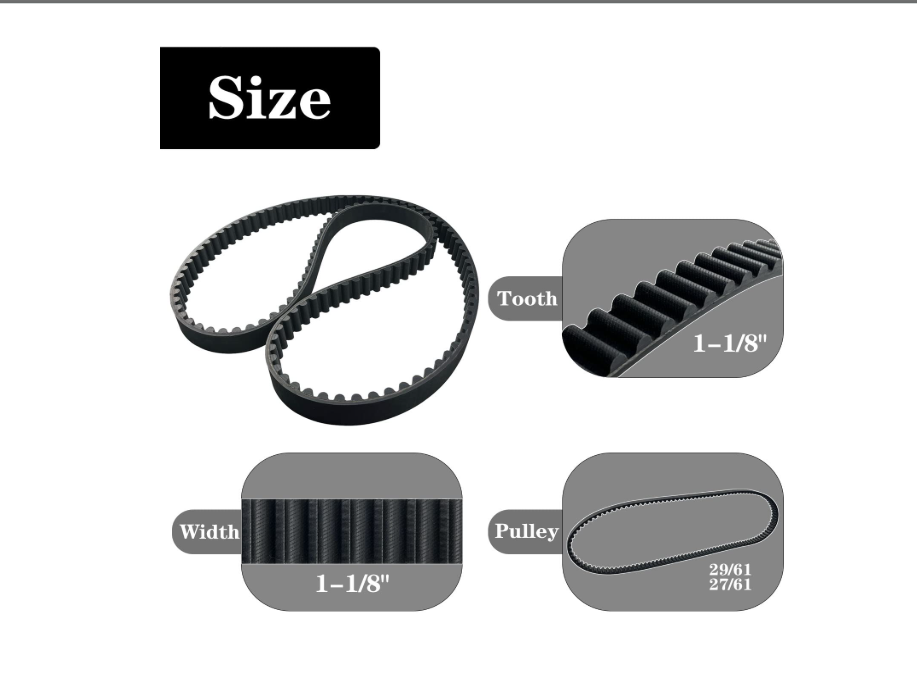
Keep belt and pulley inspection on the list too. A damaged belt, poor adjustment or worn components need assessment, but this guide does not claim an 883-specific belt failure rate.
Service history
An oil-change receipt is useful, but it does not establish that every scheduled job was completed. Match dated invoices and mileages to the correct model-year schedule. Ask specifically what is due next and request a written estimate.
For example, Harley-Davidson’s 2007 Sportster maintenance table includes oil and filter replacement at 1,000 miles and then at the listed 5,000-mile milestones. It also includes checks of the primary chain, clutch, belt and sprockets, controls, brakes and other components, with separate time-based notes. This is an example from the 2007 manual, not a universal schedule for every 883.
Low mileage does not cancel time-based maintenance. Ask about long periods off the road and what work was performed before the bike returned to use. Where records are incomplete, price an appropriate baseline service with a specialist rather than assuming every item has just been done.
Fit and A2 eligibility
A low seat can make an 883 look approachable, but reach to the ground is only one part of the decision. With the motorcycle safely supported and assistance available, check reach to the bars and foot controls in your riding kit. Consider parking, pushing the bike and the space you have at home. Our first-cruiser guide explains those checks.
Get the seat height and running weight for the exact 883 model year, then assess the actual motorcycle in person. Seat width, changed suspension and aftermarket controls can alter your reach and confidence even when the advertised seat height looks suitable.
Does a standard 883 need an A2 restrictor?
If its documented standard power exceeds 35 kW, yes: it needs a suitable restriction to meet the A2 power ceiling. An 883 already documented at or below 35 kW does not need restriction solely for that ceiling, but must still meet the other category conditions. Do not treat “883”, an advert’s rounded bhp figure or a rear-wheel dyno result as proof of entitlement.
A2 restriction example: alpha Technik XL883 XL2
For a concrete example, alpha Technik lists an XL883 Sportster XL2 variant from model year 2010 at 39 kW, reduced to 35 kW. Its listing specifies version FFBBBO and an original maximum speed of 170 km/h. This German supplier example shows why an unrestricted 883 can be over the limit; it is not UK approval for every 883 or a recommendation to buy that kit without checking fitment.
Before paying a deposit, ask a UK dealer or competent installer to identify the exact variant, confirm an appropriate restriction and supply the power and fitting documentation your insurer requires. Treat engine conversions and tuning as a fresh eligibility check, even if the bike was once sold as A2-ready.
Engine capacity alone does not establish A2 eligibility. In Great Britain the limits include 35 kW, a maximum power-to-weight ratio of 0.2 kW/kg, and no restriction from more than twice that power. Confirm the exact variant, original power and any restriction documentation against GOV.UK’s category rules. Start with our licence tool, then verify the individual motorcycle. Northern Ireland riders should use nidirect’s separate guidance.
Prices, insurance and ULEZ
Browse current UK Sportster listings on AutoTrader Bikes, then narrow your comparison to 883s. The linked page mixes 883 and 1200 models, so check each advert’s engine capacity and exact variant before comparing prices. Link reviewed 23 October 2026.
A dated asking-price starting point
On 23 October 2026, five 883 adverts on the linked AutoTrader results page asked £4,799–£5,995.
On a narrow screen, scroll the table sideways to compare all five columns.
| Year | Model | Mileage | Price | Seller type |
|---|---|---|---|---|
| 2007 | XL883 | 6,917 miles | £4,799 | Trade |
| 2010 | XL883L Super Low | Not established | £4,995 | Not established |
| 2014 | Iron 883 | 9,900 miles | £5,490 | Trade |
| 2019 | Iron 883 | 7,397 miles | £5,595 | Private |
| 2013 advertised 14 registration | XL883L Super Low | 3,443 miles | £5,995 | Trade |
This small, mixed-variant snapshot gives an initial shopping reference, not a whole-market valuation, verified condition assessment or sale-price range. Listings can disappear or change. It contains no pre-2004 comparison group, so it cannot establish a percentage premium for rubber mounts or EFI. Compare those generations separately; do not automatically pay extra for crossing a model-year boundary.
Build a shortlist of at least five comparable adverts: the same variant, similar model years and mileage, with service history and modifications recorded. Separate dealer and private asking prices, and note any warranty or preparation included. Exclude conversions or heavily customised bikes unless those are what you want. This is a practical comparison method, not a statistical valuation.
Record the date and price of each advert. Asking prices are not completed sale prices, and the cheapest listing can become the most expensive purchase after overdue work. Use the live listings to establish your current baseline, then subtract the quoted cost of bringing each bike to the condition you require.
Set your ceiling by subtracting inspection costs, immediately required work, security and a repair allowance from your available budget. Keep insurance, tax, fuel and routine servicing in a separate ownership plan. Use actual quotes for the bike and your circumstances, including its modifications.
Check insurance before paying a deposit
Get a quote for the exact motorcycle early, especially on an A2 licence. We have not verified a consistent insurance-group range covering the 883 variants here, so a generic group number would not be a dependable affordability guide.
- Identify the bike: model year, variant, registration and value.
- Declare its specification: restriction kit, engine conversion, exhaust and other modifications.
- Compare like for like: cover, total excess, mileage, commuting use, parking and security requirements.
Bennetts’ quote checklist explains the bike and rider details needed. Ask the insurer to confirm cover for the restricted or modified bike as described; do not assume an A2 kit guarantees a lower premium.
Our running-cost calculator helps organise recurring expenses. It does not value the motorcycle or include every purchase, finance or depreciation cost. Record those separately. If London riding matters, check the actual vehicle through TfL’s vehicle checker; never infer ULEZ compliance from its registration year alone.
Can a pre-2007 Sportster be recognised as ULEZ compliant?
Age alone does not settle it. TfL requires the Euro 3 NOx standard for motorcycles and accepts manufacturer evidence or results from its approved motorcycle test facilities. A carburettor is neither proof of failure nor proof of compliance.
ULEZ document route: manufacturer evidence
ask Harley-Davidson whether emissions evidence exists for the exact VIN. A Certificate of Conformity containing the relevant emissions data, or a suitable homologation letter, may support a request to correct TfL’s record. A certificate is evidence, not an emissions test or an automatic pass.
ULEZ test route: approved motorcycle testing
where documentary evidence is insufficient, check TfL’s current approved-centre list and discuss the specific motorcycle with a centre. TfL says an approved facility sends successful test results to it. A normal MOT is not this NOx test.
Use the checker’s instructions or TfL’s registration process and obtain confirmation for the actual vehicle before relying on charge-free travel. We have not verified a blanket exemption or pass result for pre-2007 883s. If London access determines the purchase, make confirmed status a condition of the deal rather than assuming the seller’s certificate will be sufficient.
A bike that needs immediate work may still make sense when the work is properly assessed and priced. Unexplained identity, history or mechanical concerns are a different matter: resolve them before agreeing the purchase.
Viewing checklist
Download the Sportster 883 viewing checklist (PDF, 2 pages)
Print it on A4 or open it on your phone. It includes tick boxes, model-specific inspection prompts and space for repair quotes, comparable adverts and unanswered questions. A plain-text checklist is also available.
- Confirm model designation, model year, registration, VIN and market of origin.
- Review V5C, MOT history, vehicle-history checks and recall follow-up.
- Match service invoices to the correct manual and record the next work due.
- List modifications, fitting evidence and insurance questions.
- Arrange a cold start, specialist inspection and a permitted, insured test ride if appropriate.
- Assess physical fit and parking practicality; confirm licence eligibility separately.
- Write down the total purchase budget and unresolved conditions before deciding.
The aim is to leave with evidence, not just an impression. Keep a copy of the advert and the seller’s written description, and record which questions remain unanswered.
Sources & further reading
Official government links
TfL and emissions
Technical and parts
Harley-Davidson resources
Market prices and insurance
Specifications, prices and rules can change. Check the linked primary source before making a purchase or riding decision. Our editorial standards.